



Engineering · Engineering-seismological studies & MASW geophysics
Every structure in Albania is designed for an earthquake. The question is which one. Our engineering-seismological study measures how the ground at your site actually behaves and turns that into the seismic parameters and design spectra your structural engineer needs, to Eurocode 8 and KTP-N2-89.
We measure the shear-wave velocity of the ground on site with a 24-channel MASW survey, classify the ground, assess the seismic hazard for the required return periods and deliver a signed report ready for the building permit. Our seismologist runs the fieldwork and analysis, and the report goes through technical review and approval under our ISO/IEC 17025-accredited laboratory’s quality system.
Who needs a seismic study
- Developers applying for a building permit. Under VKM no. 1162 of 24.12.2020, new developments need a seismic risk assessment of the site before the permit is issued.
- Structural designers. They need site-specific design input: ground type, design acceleration and response spectra, instead of conservative defaults.
- Owners of existing buildings. A change of use, extension, purchase or post-earthquake check needs a seismic assessment, which starts with the site’s seismic action.
- Infrastructure and industrial projects. Tanks, bridges and plants are sensitive to the site period and spectral shape.
What you receive
A complete engineering-seismological report, coordinated with the geological-engineering (borehole) report for the same site. It contains:
| Result | What the designer uses it for |
|---|---|
| Shear-wave velocity profile Vs(z) and Vs,30 | Ground stiffness with depth, correlated with the borehole logs |
| Ground type to EN 1998-1 (A–E) and KTP-N2-89 category (I–III) | Selects the soil factor S and the corner periods of the spectrum |
| Reference peak ground acceleration agR on rock, 95 and 475 years | The damage-limitation and no-collapse seismic action, from probabilistic (Cornell–McGuire) hazard analysis consistent with the IGJEO 2021 national hazard maps |
| Horizontal and vertical elastic spectra to EC8 (S, TB, TC, TD, ag·S, Se,max) | Direct input to the structural model and the response-spectrum analysis |
| Spectrum to KTP-N2-89 (intensity, kE, β, kr, Sa,max) | Comparison with the national code still referenced in Albanian practice |
| Predominant period of the ground TP | Check for resonance between the building and the ground |
| Liquefaction screening | Confirms whether the ground needs further liquefaction analysis |
| Regional seismotectonics and historical earthquakes | Active faults, past events and expected maximum magnitude around the site |
| Guidance on the importance factor γI | Values for importance classes II–III (housing, schools, public buildings), with the final choice left to the designer |
How we work
-
Desk study
Regional geology and tectonics, active fault systems, the earthquake catalogue and previous microzonation studies for the area.
-
Field survey (MASW)
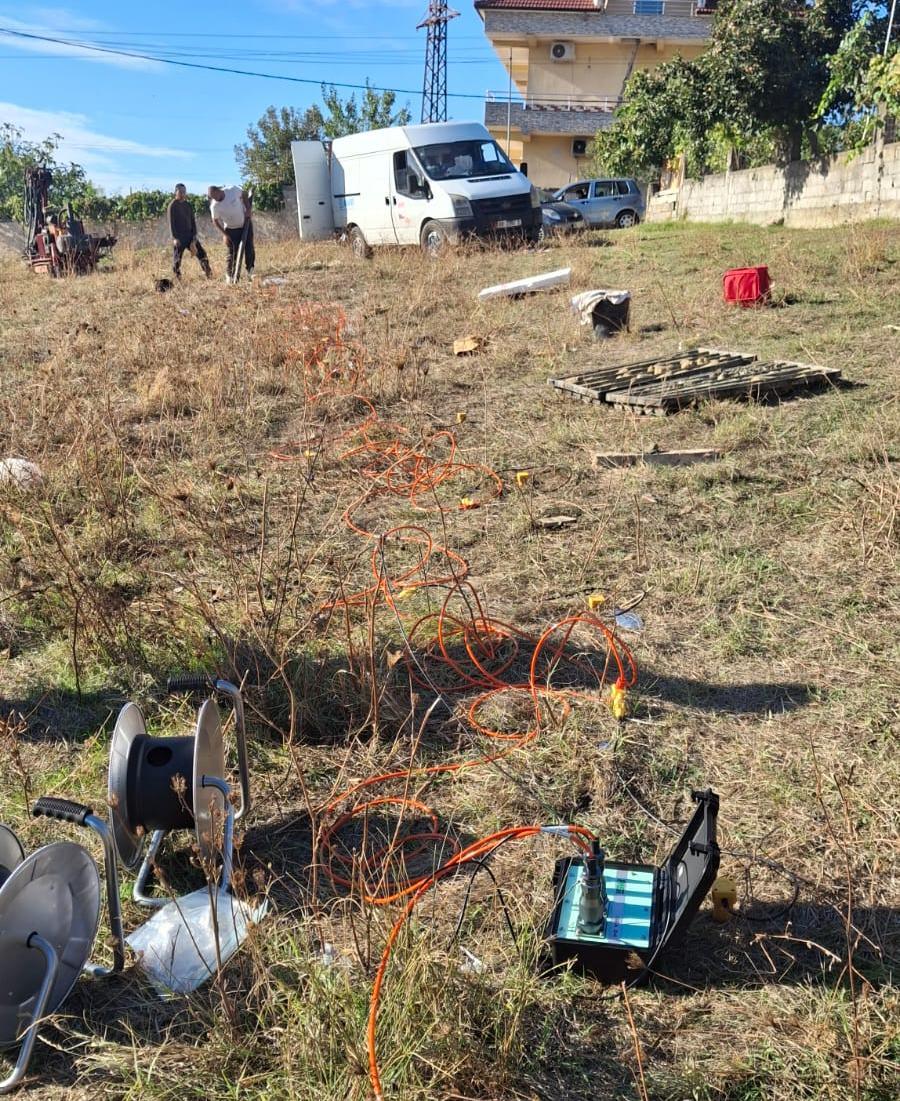
A 24-geophone line is laid out across the footprint and surface waves are generated with a hammer source.
-
Processing
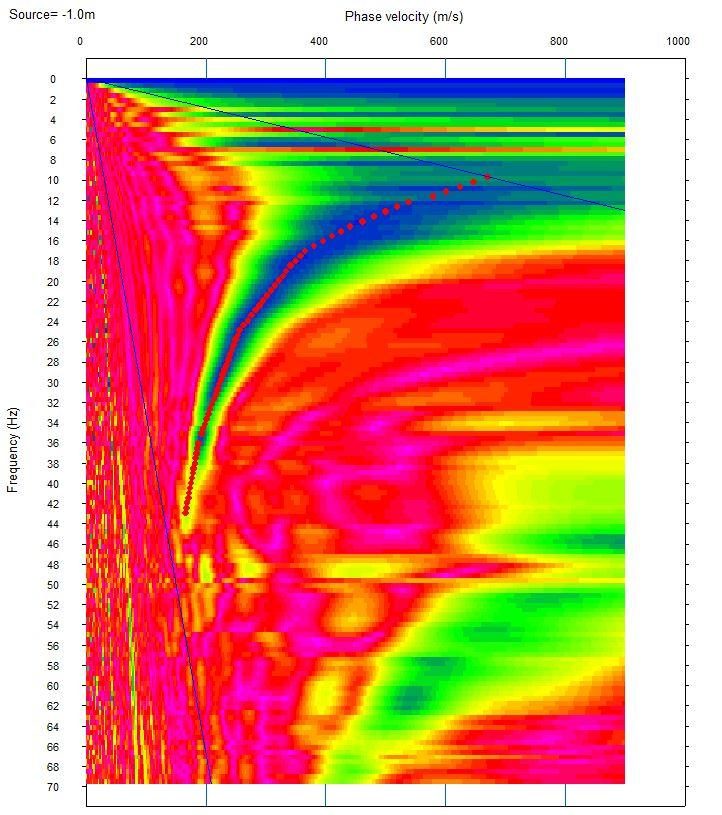
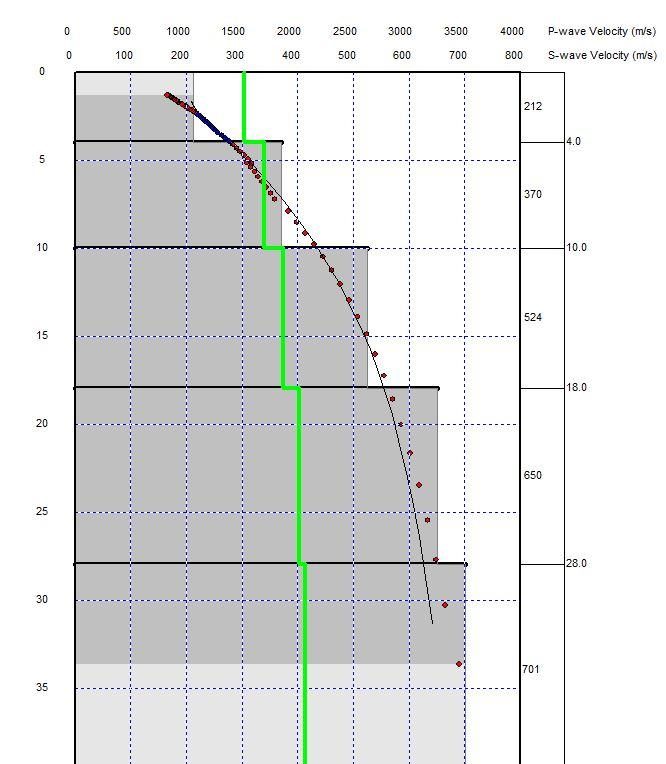
Dispersion analysis and inversion give the 1D shear-wave velocity profile, which is checked against the borehole stratigraphy.
-
Hazard analysis
Probabilistic seismic hazard at rock level for the 95-year and 475-year return periods, with strong-motion records from Albania and the region.
-
Design spectra
Ground classification, soil factor and corner periods, then horizontal and vertical elastic spectra to EC8 and the KTP-N2-89 spectrum.
-
Report & review
A signed report with document control: prepared, checked and approved by named engineers, with revision history and limitations of use.
MASW: the equipment and the method
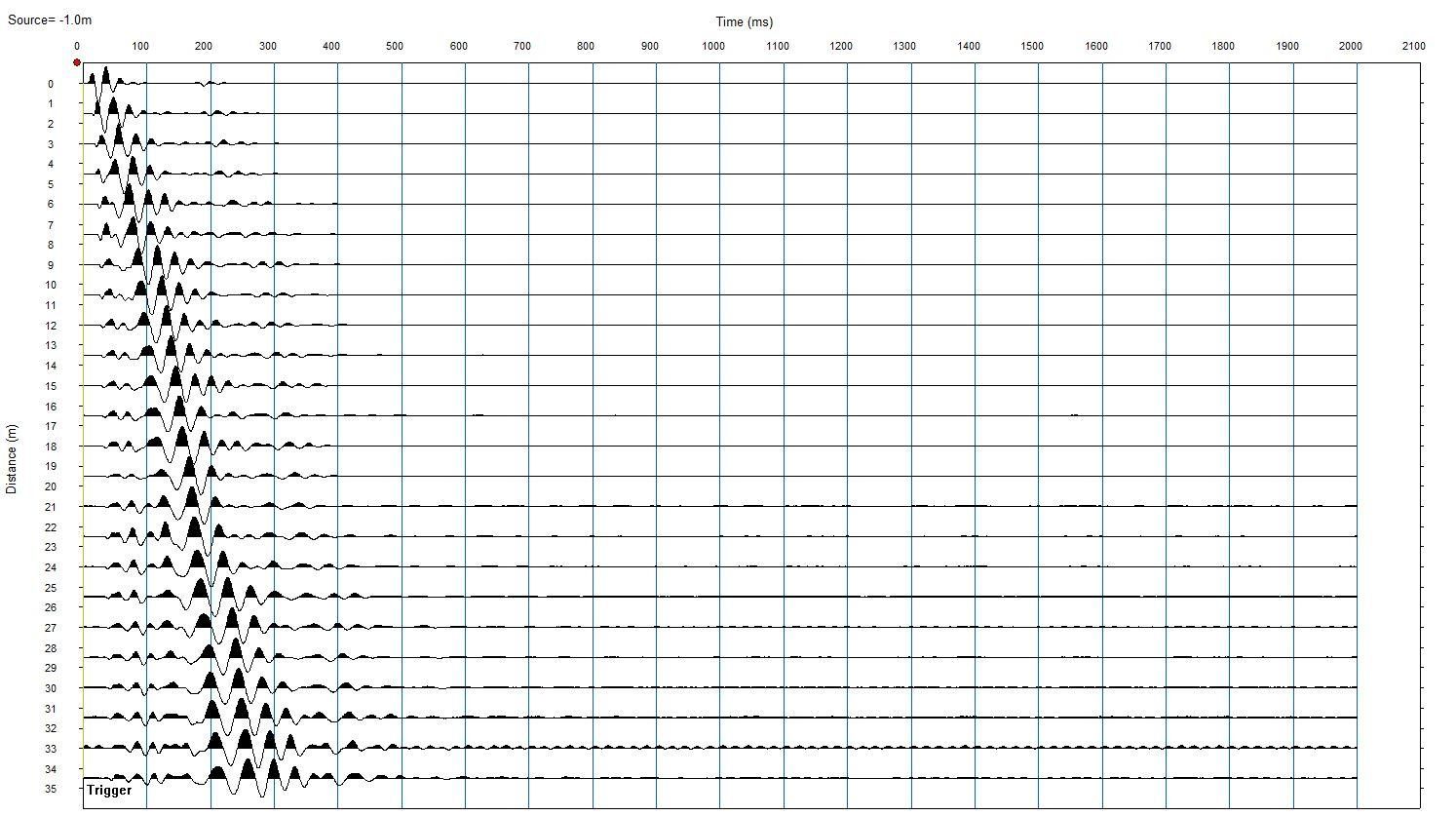
MASW (Multichannel Analysis of Surface Waves) records the Rayleigh waves produced by a hammer blow on a line of geophones. Waves of different frequencies travel at different speeds through different depths. Analysing that dispersion and inverting it gives the shear-wave velocity Vs with depth, the direct measure of ground stiffness on which Eurocode 8 classifies the ground. The active survey typically reaches about 30 m depth, exactly the depth Vs,30 requires.
| Item | Our setup |
|---|---|
| Seismograph | 24-channel seismograph, PASI GEA 24 |
| Geophones | 24 geophones, 4.5 Hz natural frequency |
| Array | Geophone spacing typically 1–2 m; line length set by the target depth and the space available; line ends surveyed with GPS coordinates |
| Source | Sledgehammer blows, offset from the first geophone |
| Recording | Typically 2,000 ms record length at 0.5 ms sampling |
| Processing | SeisImager/SW (Geometrics): dispersion spectrum, fundamental-mode picking, inversion to a layered Vs model |
Why the measured ground type matters
Eurocode 8 does not apply the same earthquake to every site. For the same design acceleration on rock, the soil factor S and the corner periods TB, TC and TD change with the ground type. That changes both the height and the width of the design spectrum. A ground type taken from tables or assumed “to be safe” can overstate the seismic forces and add cost to the structure. It can also understate them, which is worse. Measuring Vs,30 on site removes that uncertainty.
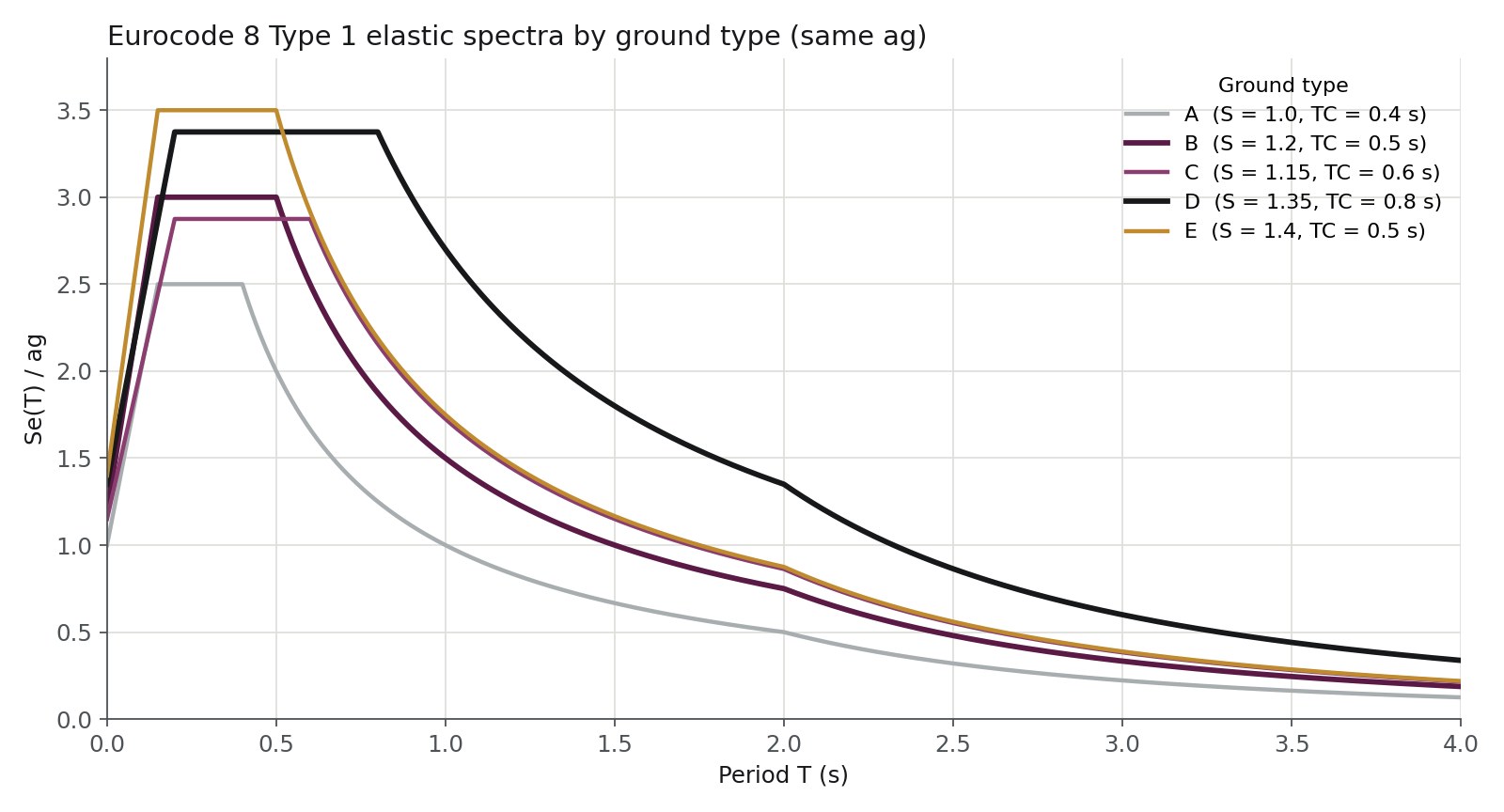
For every site our report states the measured Vs,30 and ground type and the full set of spectral parameters. It also gives the predominant period of the ground, so the designer can check that the building’s own periods do not coincide with it.
Seismic assessment of existing buildings
For an existing building, the site study is the first half of the job. We combine the site’s seismic action with a survey and testing campaign of the structure and an assessment to EN 1998-3 (knowledge level, confidence factor, linear or pushover analysis). That shows which members fall short and by how much. Where the building needs upgrading, we design and deliver the retrofit; see Structural Strengthening.
Standards and references
- EN 1998-1 Eurocode 8: seismic actions, ground types and response spectra
- EN 1998-3 Eurocode 8: assessment and retrofitting of buildings
- KTP-N2-89 Albanian technical conditions for earthquake-resistant design
- VKM no. 1162/2020 seismic risk certificate for development and building permits
- IGJEO (2021) probabilistic seismic hazard maps of Albania
- Park et al. (2007) MASW, active and passive methods
Send us the site location and the planned building. We’ll confirm the scope, coordinate with the borehole investigation and schedule the MASW survey.