

A terrace rarely leaks because the material was wrong. It leaks because the system was chosen without looking at the substrate, the exposure and how the surface will be used.
SARP supplies and supervises MAPEI and Polyglass waterproofing systems on terraces, roofs and industrial warehouses throughout Albania. This page explains how the system is chosen — and where laboratory verification stops, because that limit matters too.
The five system families
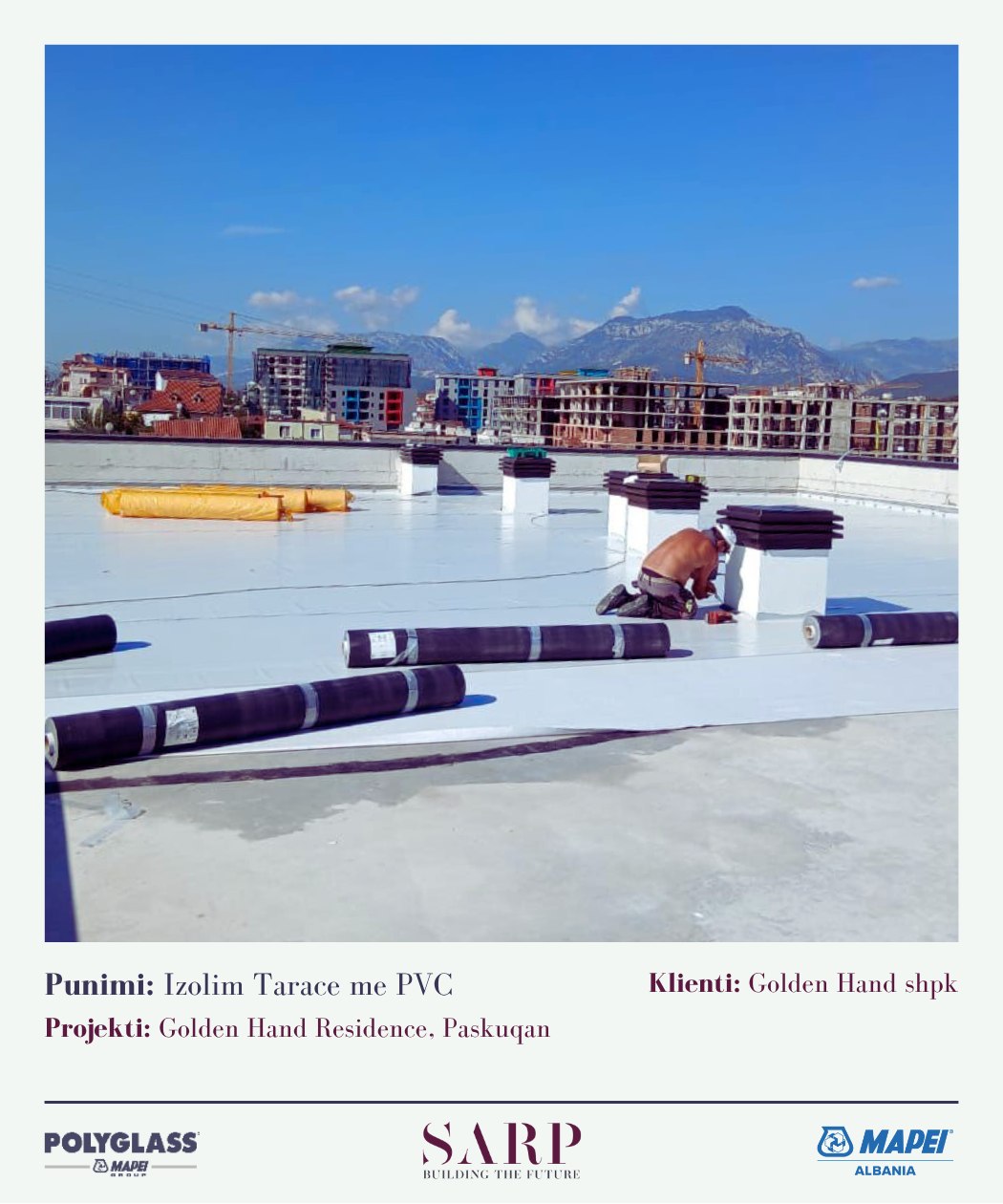
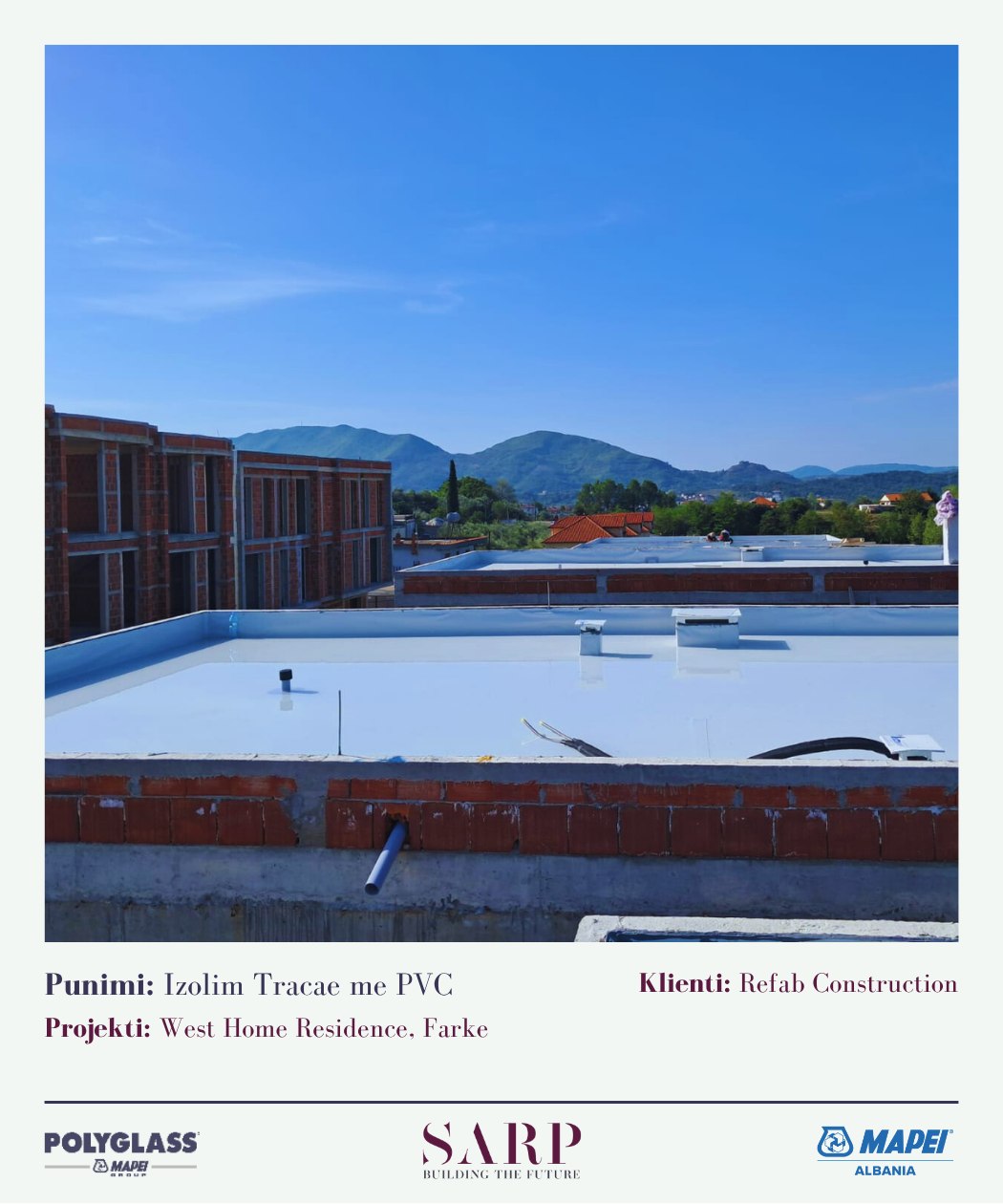
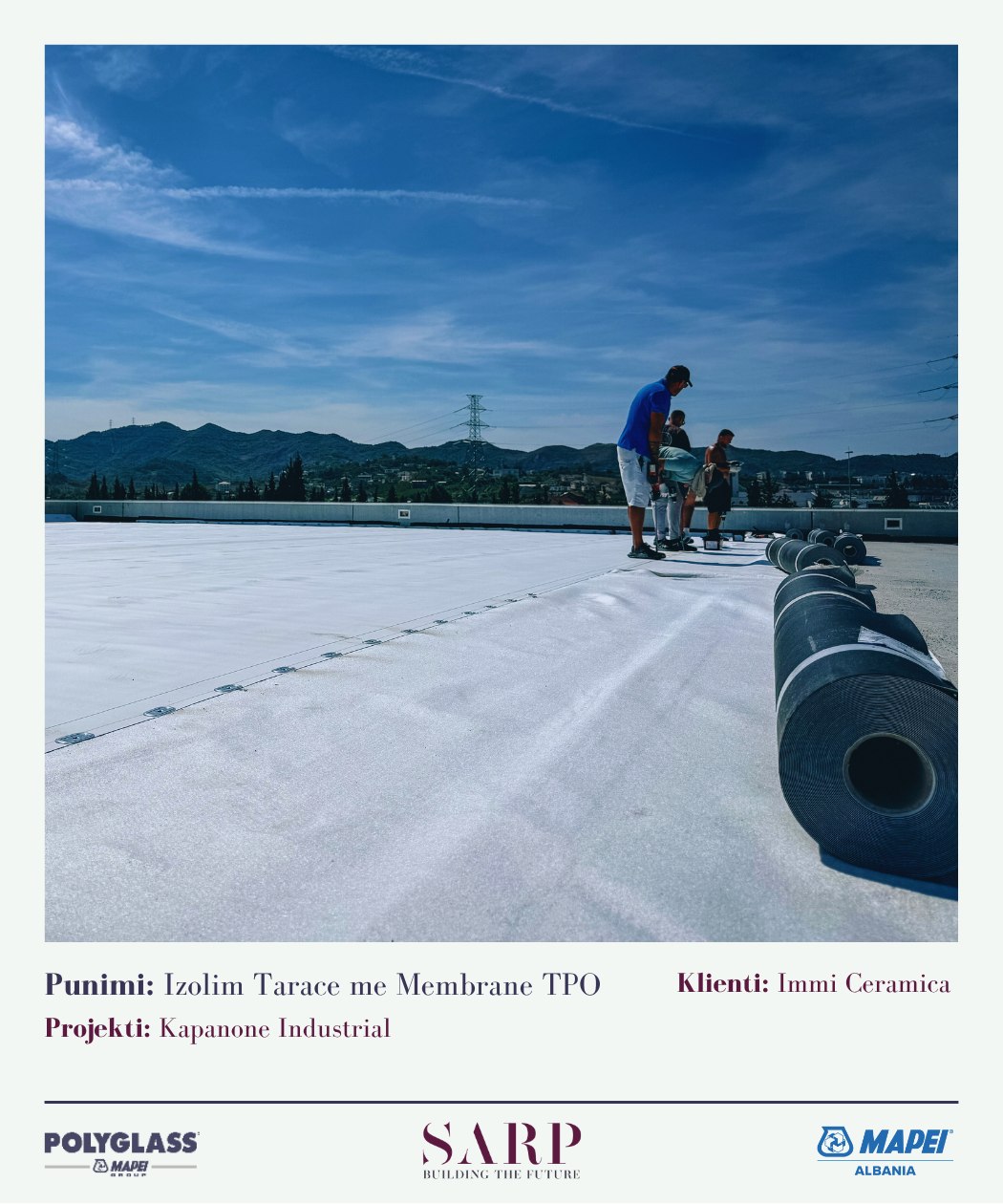
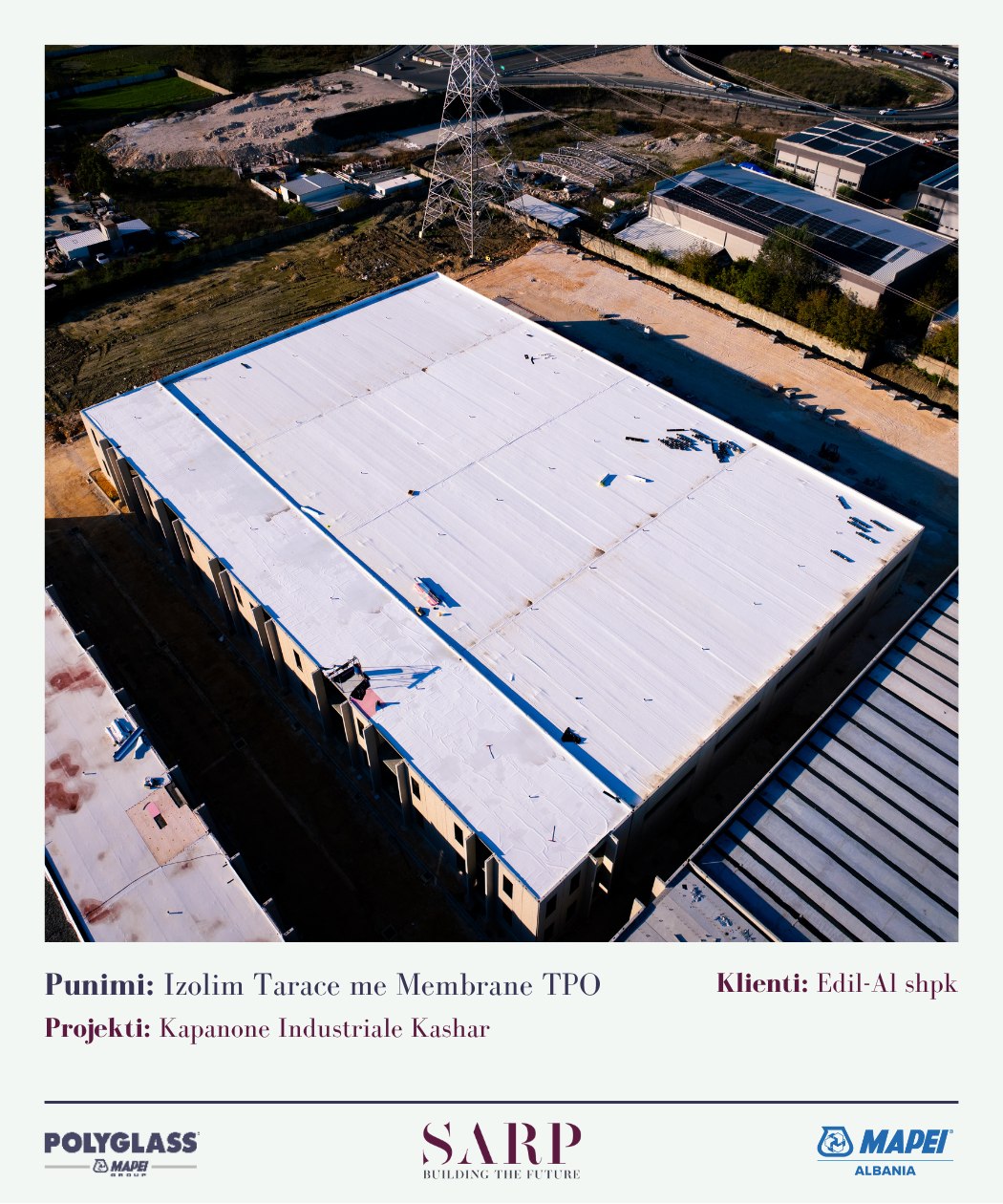
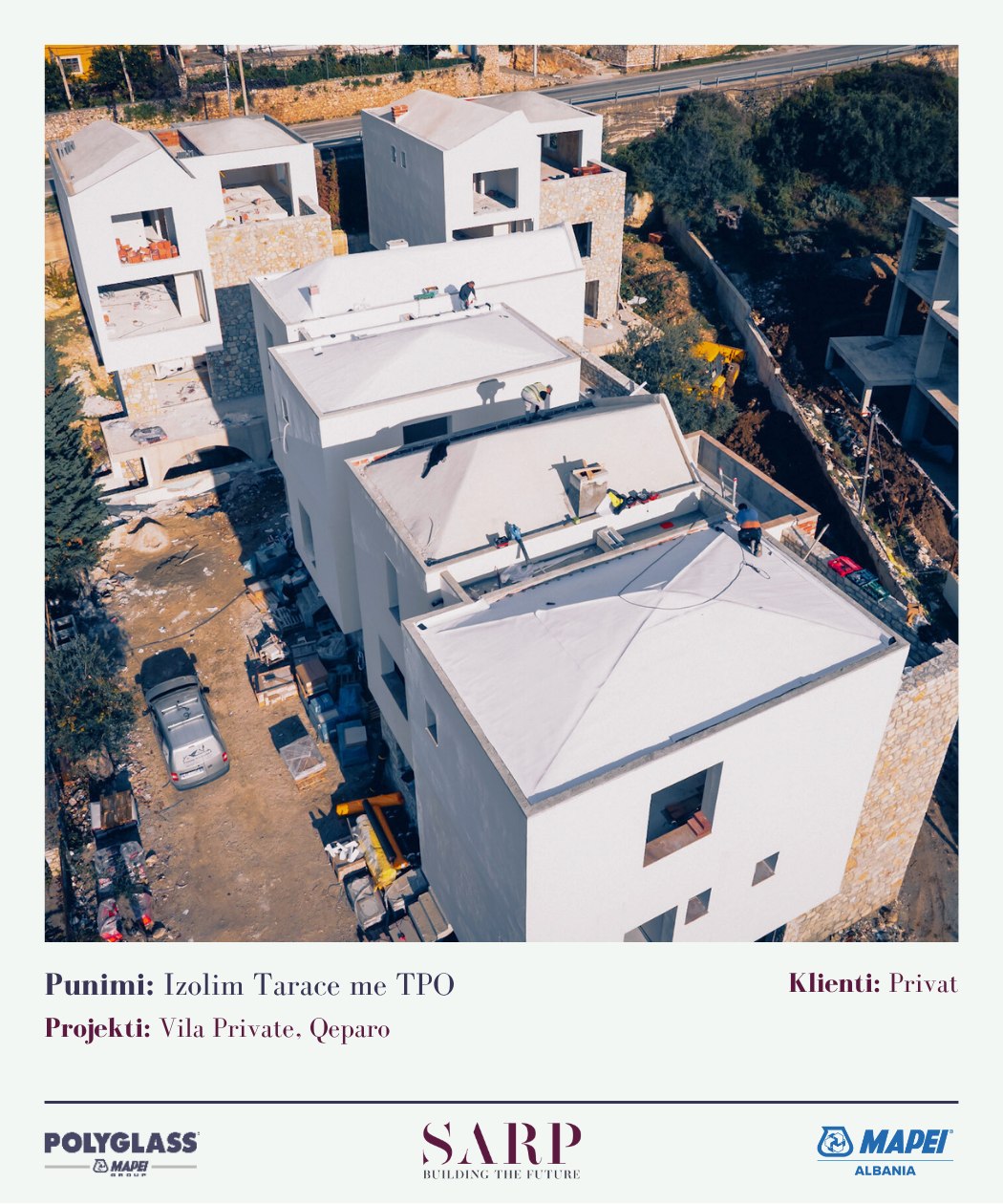
Synthetic PVC and TPO membranes
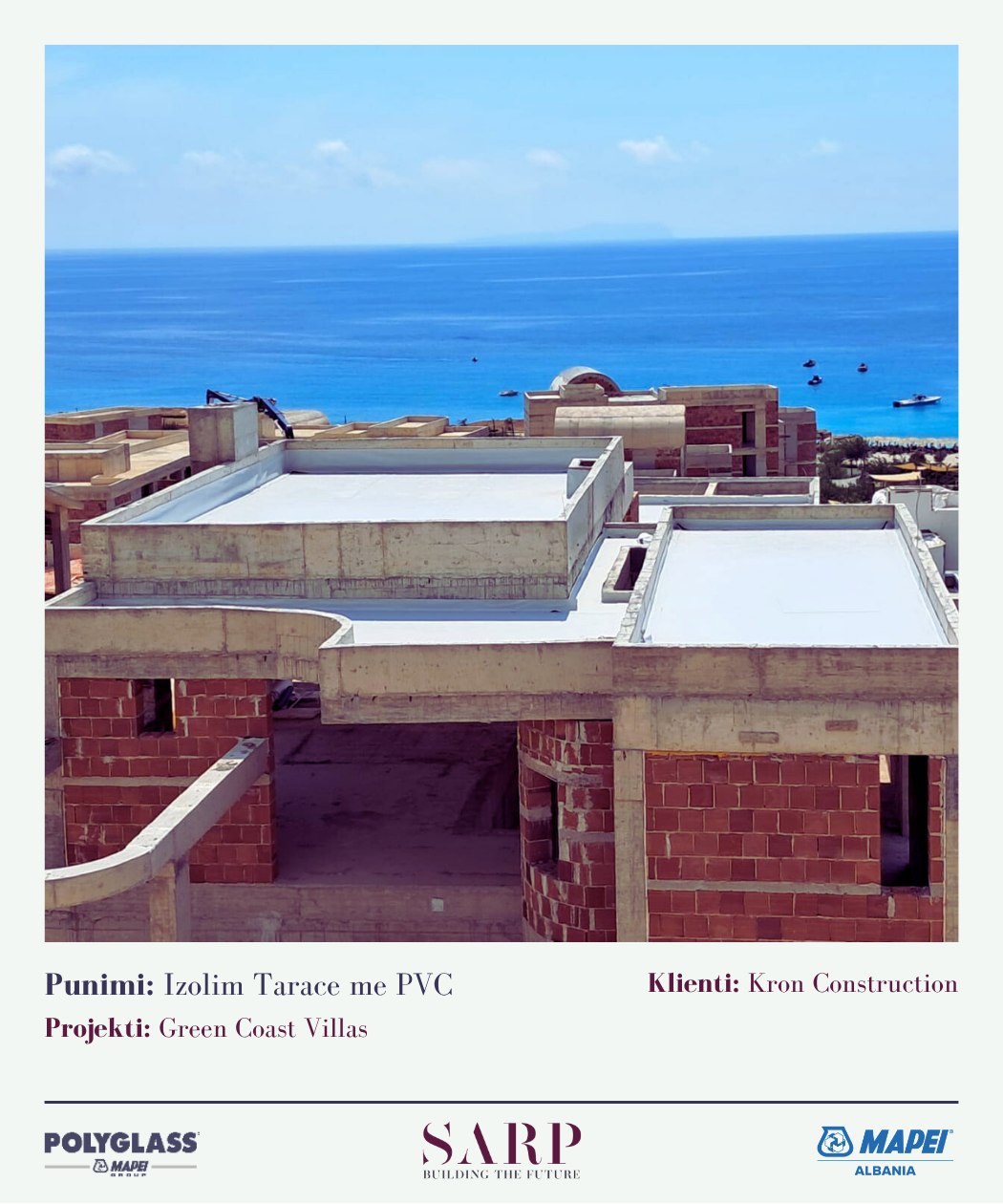
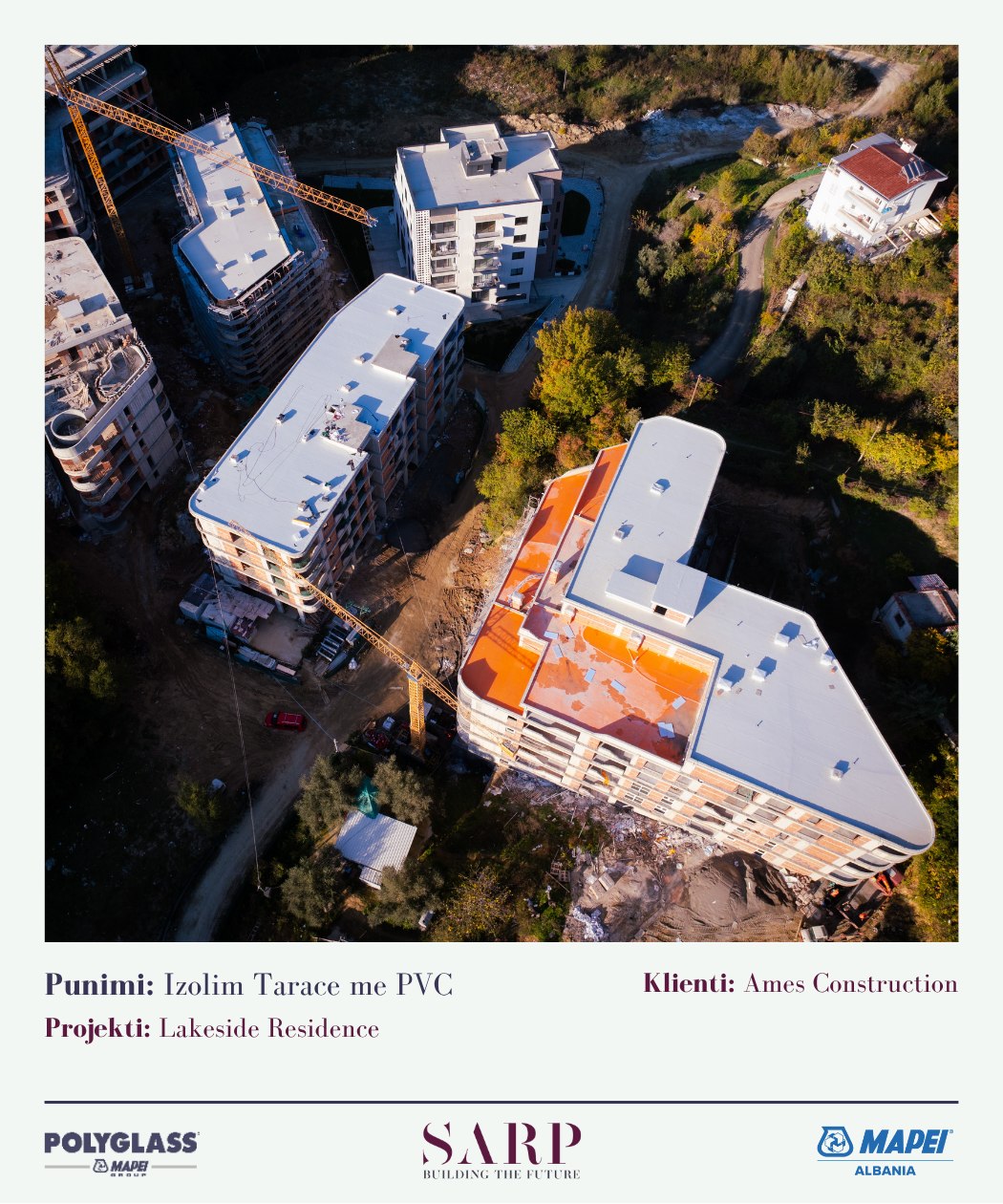
For large exposed surfaces — industrial warehouses, flat roofs, terraces with no covering layer. Laid in a single layer, mechanically fixed or hot-air welded.
Advantage: speed of installation, and seams that are welded rather than glued.
Limitation: they require a level substrate and carefully executed detailing around every penetration.
Elastic cementitious mortars
For terraces and balconies that will be covered with tiles. MAPELASTIC SMART bridges cracks over 2 mm, according to the MAPEI technical data sheet. MAPELASTIC TURBO dries quickly even at low temperatures and over substrates that are not fully dry, according to the MAPEI technical data sheet. MONOLASTIC is one-component.
Advantage: the layer stays beneath the tile, protected from UV and from use.
Limitation: it requires a sound substrate. It will not bridge a screed that moves.
Liquid membranes
AQUAFLEX ROOF and AQUAFLEX ROOF PLUS for exposed surfaces. AQUAFLEX ROOF HR has a solar reflectance index of SRI 105, according to the MAPEI technical data sheet, which lowers the surface temperature. MAPELASTIC AQUADEFENSE and MAPEGUM WPS for interior and wet areas.
Advantage: seamless, following any shape — often the only practical option on a terrace with many penetrations, pipes and corners.
Limitation: thickness depends on application. This is the layer where site supervision is worth more than the technical data sheet.
Polyurethane systems
PURTOP EASY with a coloured finish and PURTOP EASY T transparent, for new or existing terraces and balconies where the surface stays visible.
Bituminous membranes
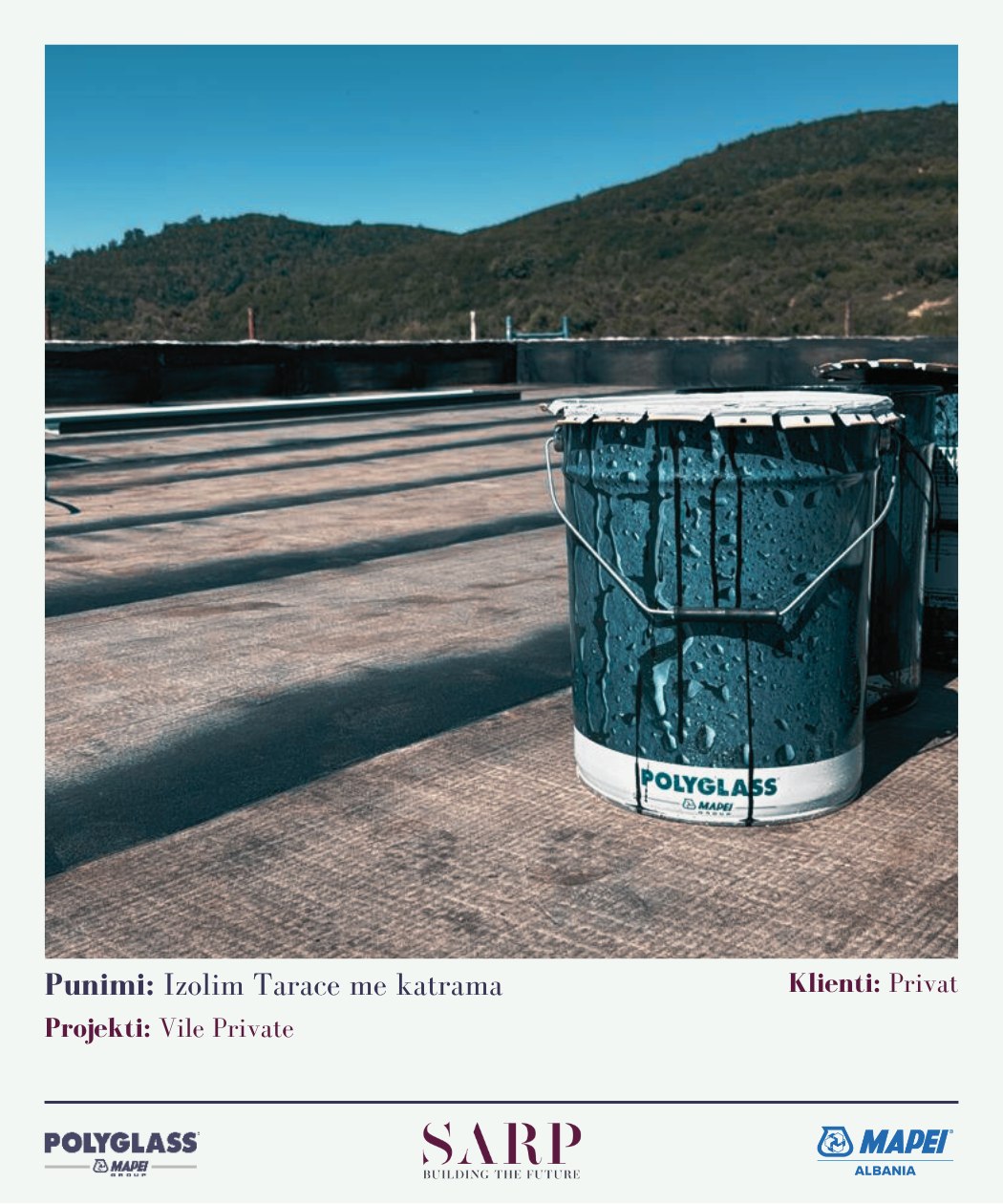
The bituminous membranes are Polyglass, including TREND HS. The classic solution for terraces and roofs, torch-applied. Polyglass joined the Mapei Group in 2008, but remains a separate brand.
The details that fail most often
[confirm: David — which detail do you most often see fail on an Albanian terrace? One or two sentences, from site. This is the only part of this page that no competitor can write.]
Where laboratory verification stops — and why it matters
The SARP laboratory is accredited to ISO/IEC 17025, certificate LT 069, issued by the General Directorate of Accreditation.
It is not accredited to test a waterproofing membrane against its own harmonised standard — EN 14891, EN 13707, EN 13969. No laboratory in Albania is accredited to carry out that test.
For that layer, the manufacturer’s declaration of performance is not merely the preferred evidence. It is the only evidence that exists.
What can be measured, within the scope of accreditation:
- compressive strength of the substrate concrete, 1÷88 MPa, to BS EN 12390-3
- hardened screed mortar, 2.5÷25 MPa, to BS EN 1015-11
- cores from the existing structure, to BS EN 12504-1
- non-destructive testing — rebound hammer 10÷70 MPa and ultrasonic pulse velocity
The substrate is where most terraces fail. The substrate can be measured.
Completed works
Eight terraces and roofs, supplied and supervised by SARP.
Do you have a terrace to waterproof?
Our technical team helps select the system according to the substrate, the exposure and the programme — and verifies the substrate in our accredited laboratory before the layer is covered.
+355 68 202 6609 · +355 67 202 2609
Autostrada Tiranë – Durrës, km 29, Fshati Vrrin, Komuna Rrashbull, Durrës